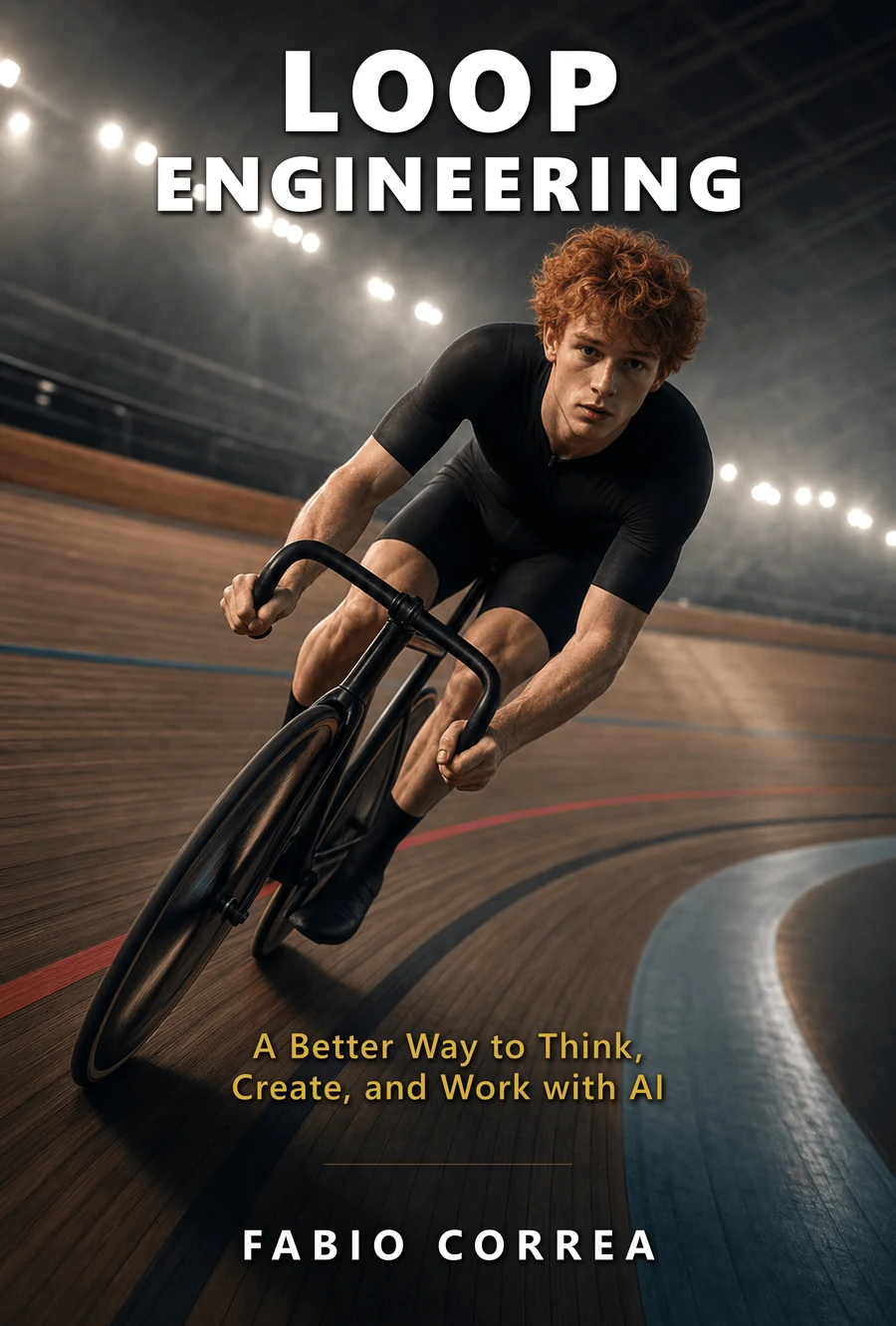
The Applied AI foundation volume · Second edition
A better way to think, create, and work with AI
Most books about working with AI analyse the model. This one analyses the work around the model. The book stays conceptual and platform-agnostic; this site is its extension. It carries the sources behind the chapters, the tools that put the framework to work, and the implementation notes that keep it current between editions.
What loop engineering is. Loop engineering is the design of the work cycle around an AI system: how the goal is framed and checked, which tools and permissions the system gets, what memory the work leaves behind, and where a human keeps the decision. The model is one component in that cycle, and rarely the one that decides whether the work succeeds.
The book develops the discipline through seven design commitments and a harness design method for real deployments. It stays conceptual and platform-agnostic on purpose: vendors change every quarter, and the design questions do not.
Second Edition · October 2026 · Paperback and Kindle · 292 pages · ISBN 9798184606361 · CorreaX Publishing
Choose your path
Follow the chapters from the start, read the seven design commitments, work through the worked examples, or see how real tools will be scored in the harness assessments.
Start here
Learn the framework
MCP Catalogs and Marketplaces
The registries, discovery catalogs, and plugin marketplaces where MCP servers and agent plugins are found, with dated figures.
Open the Catalog →Harness Assessment
Real AI tools, scored from the operator's seat against the book's Harness Canvas. In preparation: the first assessment is being built, and its traces will be published alongside the verdicts.
Open the Assessment →Materiality Dial
Calibration patterns by domain: where the dial sits for routine work, and which compensating controls each domain demands.
Open the Patterns →Common questions
Frequently asked questions
What is loop engineering?
Loop engineering is the design of the repeated work cycle around an AI system: goal, state, tools, check, retry, escalation, and stop. Prompt engineering optimizes a single interaction; loop engineering designs the cycle the interaction lives in, including how results are verified and what the work remembers.
Who is Loop Engineering for?
Writers, analysts, educators, leaders, creatives, researchers, and builders who use AI systems in their work and need the results to hold up under review. It is written for the person who stays accountable for the output.
What is new in the second edition?
The second edition (October 2026, 292 pages) adds a closing part on the strategic harness: the Harness Canvas for designing a deployment (Chapter 17), a week-of-work audit method (Chapter 18), and an account of what can and cannot yet be claimed for the framework (Chapter 19). Corrections found in the first edition are incorporated into the text.
What is the Harness Canvas?
A one-page worksheet from Chapter 17 for designing the harness around an AI deployment: outcome, stakes, semantic work, deterministic controls, evidence, authority, stop and rollback, memory and debt, improvement loop, and owner. The worksheet is free on the Chapter 17 page.
Where are corrections and updates published?
Corrections to the second edition are collected by email and logged on the errata page. Material that ages, such as tool catalogs and the harness assessments, lives on this site, the book's extension between editions.
The back cover
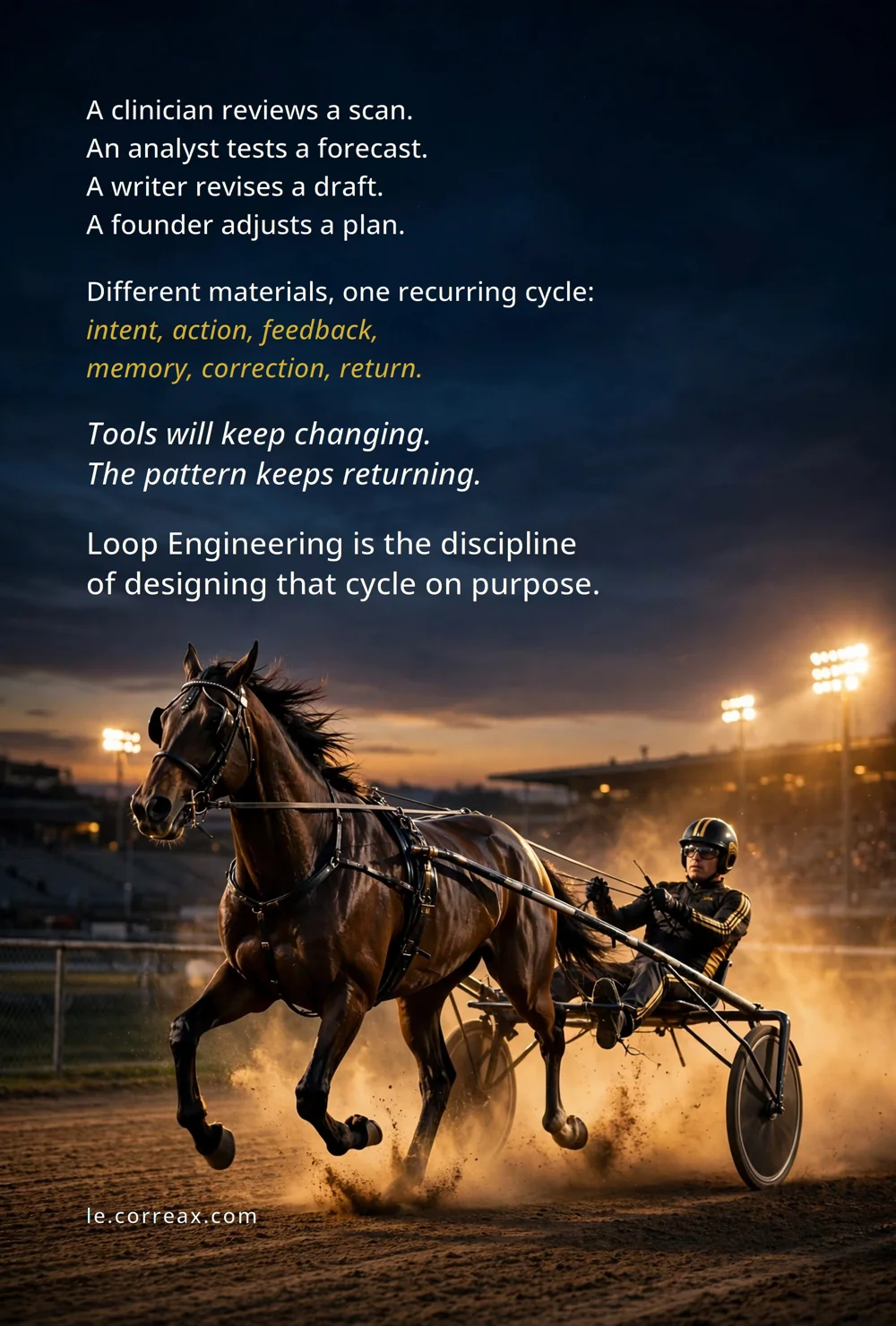
The pattern keeps returning
Different materials, one recurring cycle: intent, action, feedback, memory, correction, return.